Back to Blog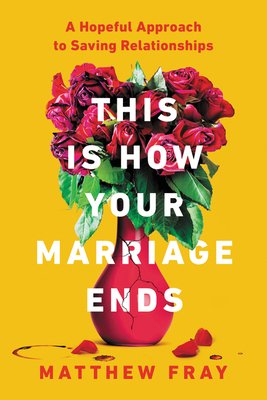
This Is How Your Marriage Ends by Matthew Fray
Katherine Roberts LMFT-Associate, TBRI Practitioner
I picked this one up expecting another relationship book stacked with research and frameworks. What I got instead was something closer to a long, honest conversation with a friend who's been through it and isn't interested in dressing it up.
Fray built this book out of his own marriage — specifically, the slow unraveling of it, famously kicked off by an essay about leaving dishes by the sink. That anecdote is the entry point, but it's really a stand-in for something much bigger: the small, repeated moments where one partner's needs go unseen, and how those moments accumulate into real distance. What makes the book work is that he doesn't tell this story from a safe, analytical remove. He tells it from inside his own failure, which is a much harder thing to do well.
That's what I appreciated most — the vulnerability. It would have been easy for Fray to write this as a case-study-driven guide with himself kept at arm's length. Instead, he's willing to be the example. He's transparent about being a good guy who was, by his own account, a bad husband, and he doesn't flinch from that contradiction or try to explain it away. That kind of honesty is rare in this genre, and it's what makes the book land as relatable rather than preachy.
The tone is what carries it, too. Fray writes like he talks — conversational, a little self-deprecating, funny in the exact places you need relief from how uncomfortable the material is. He's covering genuinely difficult territory — emotional neglect, the ways good intentions still cause harm, the slow erosion of trust — and he manages to stay straightforward about it without ever going clinical or heavy-handed. Humor and realism doing that much work together, without either one undercutting the other, is a hard balance to strike.
If I had one critique, it's that the book leans almost entirely on his perspective and his side of the story, so it reads more like one honest account than a fully balanced picture of what goes wrong in marriages generally. But I don't think that's really a flaw so much as the nature of the book he set out to write. He's not claiming to speak for every marriage — he's showing you his, closely enough that you start recognizing pieces of your own.
Overall, a genuinely good read — funny, uncomfortable in the right ways, and worth it for the vulnerability alone.